
Food Safety
Under proAction, Canadian dairy farmers follow specific processes and protocols to reduce risk and prevent food safety hazards on their farms. By following these procedures, farmers meet or exceed stringent safety standards as well as federal and provincial regulations.
proAction food safety requirements have been mandatory on farms since 2015 and are recognized by the Canadian Food Inspection Agency (CFIA) for their rigour and strength. Requirements are reviewed and updated regularly. Dairy farmers apply food safety management practices on farms using a science-based, preventative approach, based on the principles of the internationally known Hazard Analysis Critical Control Points (HACCP) system.
Establishing Standard Operating Procedures Around Food Safety
All dairy farmers are required to establish standard operating procedures (SOP) to enhance food safety on their farms. These SOPs include:
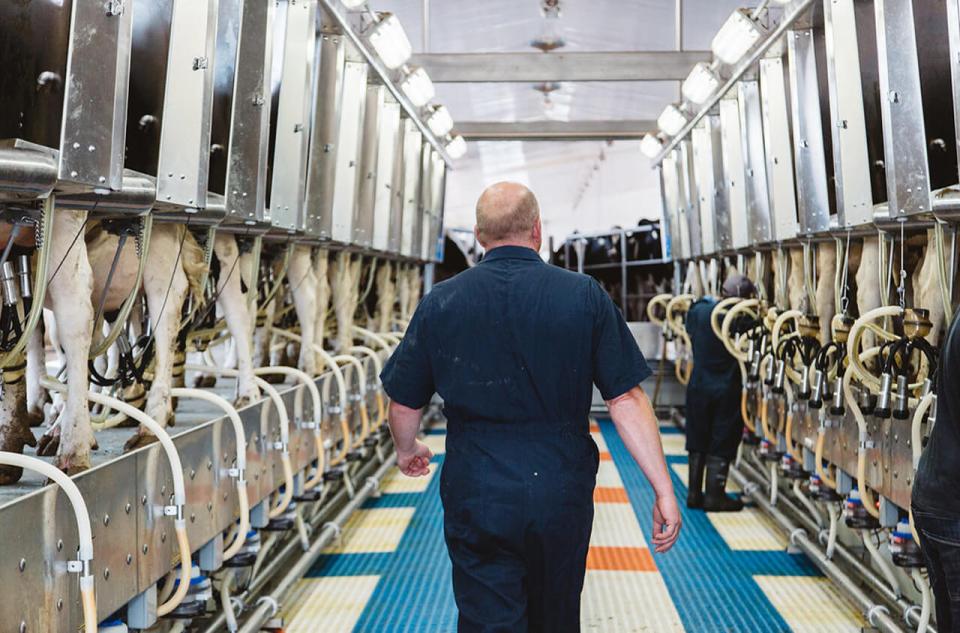
- Milking procedures, which include requirements such as disinfecting teats before milking and discarding abnormal milk
- Procedures for treating cattle
- Procedures for transporting cattle
Minimizing the Risk of Accidental Contamination of Milk
Under proAction and other relevant regulations, farmers do the following to minimize risk:
- All pesticides and commercial fertilizers must be labelled and kept away from animals and the milk house
- Cleaning products must be stored properly and kept away from cattle and milking equipment
- Water in the barn is tested by independent laboratories every year to ensure it is potable
- Third-party professionals inspect milking and cooling equipment wash analyses on every farm each year
- Farmers follow documented processes to consistently and safely milk cattle, usually two to three times a day
- Farmers work hard to maintain clean and sanitary milking equipment
- Farmers regularly train their workers to ensure that procedures are correctly followed and that emergency procedures are well-understood
Safeguarding Against Harmful Bacteria
To minimize the growth of harmful bacteria, all milk is stored between 1 and 4 degrees Celsius in stainless steel bulk tanks on farm. More than 70% of farms have a time temperature recorder that sends an alarm to farmers if the milk is not at its proper temperature.
Ensuring the Safe Use of Antibiotics
Dairy farmers take great care to ensure that antibiotics are used prudently and take proactive measures to protect the safety of the milk supply.
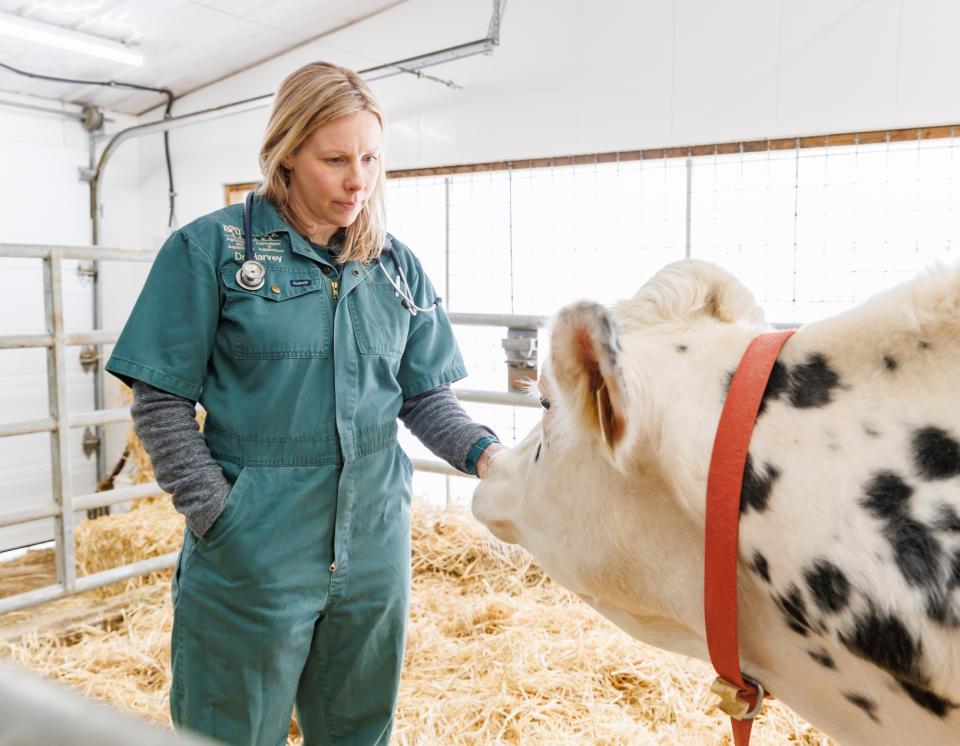
- Farmers work closely with veterinarians and undergo an annual Cattle Health Declaration process with them.
- Antibiotics are administered only by trained professionals.
- Prescriptions are documented on-farm in permanent records.
- Medicine for cows is administered according to the label or as prescribed by veterinarians.
- All treatments are recorded to respect milk withdrawal times and animals that are sold are kept on the farm until the meat withdrawal times are respected.
- Treated cows are visually identified so their milk is discarded until deemed safe.
- Antibiotics are kept at their proper storage temperature and conditions.
- In addition, ALL milk is tested for antibiotics before being processed.
RESOURCES FOR FARMERS
The on-farm food safety program (formerly the Canadian Quality Milk, or CQM program) uses a science-based, preventative approach, internationally known as Hazard Analysis Critical Control Points (HACCP) program. This program helps farmers prevent and reduce food safety risks and hazards on their farms.
The food safety program was recognized by the Canadian Food Inspection Agency (CFIA) in May 2015 for promoting the consistent application of management practices and improving food safety management on Canadian dairy farms.
Validation Requirements
Canadian dairy farmers must manage these critical control points (CCPs) in order to minimize food safety risks: milking management, cooling & storage of milk, and shipping animals. In addition to CCPs, there are eight categories of best management practices (BMP). The requirements listed below are annually validated through self-declaration or through an independent validator.
Dairy Facilities and Pesticides
Is your farm currently licensed to ship milk by the provincial regulatory authority?
Do you only use pesticides registered for use in the: milk house? barn? fields?
Do you use registered pesticides according to the label and follow pre-harvest intervals to harvest or grazing?
Do you store pesticides, treated seed and fertilizer in a safe and secure manner and according to provincial dairy regulations? (concerned with both cow and milk exposure)
Is any hose connected to the milk house or barn water system used for filling pesticide sprayers or containers? If yes, do you have an anti-backflow device?
Do your animal husbandry, manure and waste management systems ensure the cleanliness of lactating cattle’s udders, legs and flanks?
Do you restrict cattle access to manure storage or manure run-off?
At the time of milk pick-up, is the laneway and loading area free of manure contamination?
If you use sewage sludge, do you have the necessary approval/permits required to use sewage sludge on your farm?
Feed and Water
Do you use medicated feed? If yes: have you established and implemented a Standard Operating Procedure for feeding medicated feeds?
Do you receive medicated feeds with milk or meat withdrawals or that are prohibited for use in lactating cattle? If yes, are feed bins and storage containers clearly marked for those who deliver the feed and for those that use it?
Do you have pet foods on your farm or feeds that are labeled not for use for ruminants? (i.e. clearly labelled with the warning: Feeding this product to cattle, sheep, deer or other ruminants is illegal and is subject to fines or other punishment under the Health of Animals Act.) If yes, do you store and handle those feeds to avoid feeding those feeds to cattle or cross-contaminating feeds for cattle?
Traceability
Do you identify all cattle to allow for the maintenance of treatment records (e.g. barn tags, neck chains, etc.), if you do not use approved dairy tags (DairyTrace/Attestra) for management purposes?
Biosecurity and Animal Health
Do you have a Cattle Health Declaration signed by your veterinarian annually and the most recent version kept on file?
Medicines and Chemicals used on Livestock
Do you maintain a list of all medicines and chemicals that you use on livestock?
Do you store and handle livestock medicines and chemicals:
a) (including syringes and needles) in a clean and sanitary manner, in a dedicated place, according to label directions?
b) In a manner that will not contaminate: milk? meat? feeds?
c) For non-lactating and lactating dairy cattle, and products not intended for dairy cattle in separate areas or cupboards?
Do you use only livestock medicines (including medicated foot-baths):
- Approved in Canada for use in dairy cattle?
- According to the label?
- According to written veterinary directions, which must be available for every treatment administered not according to the label and for every veterinary drug used that is not approved for use in Canada?
Do you check for and record the identity of any animal and treatment site whose treatment resulted in an irretrievable broken needle?
Do you mark all treated cattle in the milking herd that have milk withdrawals (e.g. leg bands)? Specify type:
Do you maintain a permanent written record of all medicines and chemicals used on livestock that have a milk or meat withdrawal?
Have you established and implemented a Standard Operating Procedure for treating cattle?
Milking Management
Have you established and implemented a Standard Operating Procedure for pre-milking?
Have you established and implemented a Standard Operating Procedure for milking?
Do you ensure that all teats are thoroughly cleaned, sanitized and dried (e.g. manure and teat dips removed) before milking, using approved products?
Have you established and implemented a Standard Operating Procedure to minimize the risk of shipping abnormal milk?
Have you established and implemented a Standard Operating Procedure to minimize the risk of shipping milk from treated cattle?
Do you test milk from new animals for inhibitors before shipping their milk, not ship the milk unless the results are negative and record the results? (Record 10) Or do you have a letter of guarantee from the previous owner?
Cooling and Storage of Milk
Is the bulk tank temperature recorded and checked after every milking for each bulk tank?
Facility and Equipment Sanitation
Do you use approved cleaning products according to the accessible milk house cleaning and sanitizing chart?
Do you regularly inspect and record the cleanliness of milking equipment or each washing
system, including checking and recording the temperature of the hot water from the tap or wash water,
at least monthly?
Have you established and implemented a Standard Operating Procedure for post-milking system cleaning?
Do you have each wash system evaluated annually by an industry professional and have the deficiencies been corrected?
Is the milk house used exclusively for cooling and storing milk and for cleaning, sanitizing and storing materials and equipment used in the production and handling of milk?
Are cleaning chemicals stored in a location and manner that will not contaminate milk?
Are the milk house & external surfaces of the milking and milk storage equipment kept clean?
Do you have a functioning safety switch or failsafe system in place to avoid accidental entry of wash water into the tank?
Have you removed all mercury thermometers and vacuum columns from the milk house?
Do all lights near the bulk tank opening have a protective covering or do the bulbs have a protective safety coating?
Use of Water for Cleaning Milk Contact Surfaces
Do you:
- Annually test the water used for milking equipment sanitation for the microbiological parameters determined by the provincial health authority?
- Ensure the water meets the microbiological parameters?
- Keep or record the water test results?
Handling and Shipping Animals
Have you established and implemented a Standard Operating Procedure for shipping cattle?
Staff Training and Communication
Do you:
- Regularly train staff to implement your proAction program?
- Train new staff to implement your proAction program?
- Ensure staff have access to Standard Operating Procedures, corrective action plans and records that you have developed and maintained?
Do you have a written corrective action plan on how to communicate and address:
- Incorrect administration of medications or other chemicals to an animal (BMP)?
- Entry of milk from a treated animal into the bulk milk tank (CCP)?
- Improperly cooled or stored milk (CCP)?
- Dirty milk contact surfaces (BMP)?
- Improper water temperature (BMP)?
- Milking equipment water contaminated with bacteria (BMP)?
- Sale of a treated animal or an animal with a broken needle and the next buyer was not informed (CCP)?
Do you keep a record of any problems that have occurred with, and the corrective actions taken regarding:
- Any treatments administered to animals (Record 17)?
- Inhibitor residues in milk (Record 17)?
- Cooling and storage of milk (Record 12 or 17)?
- Equipment sanitation and hot water/wash water temperature (Record 13 or 17)?
- Water quality (Record 15 or 17)?
- Shipping animals (Record 17)?
